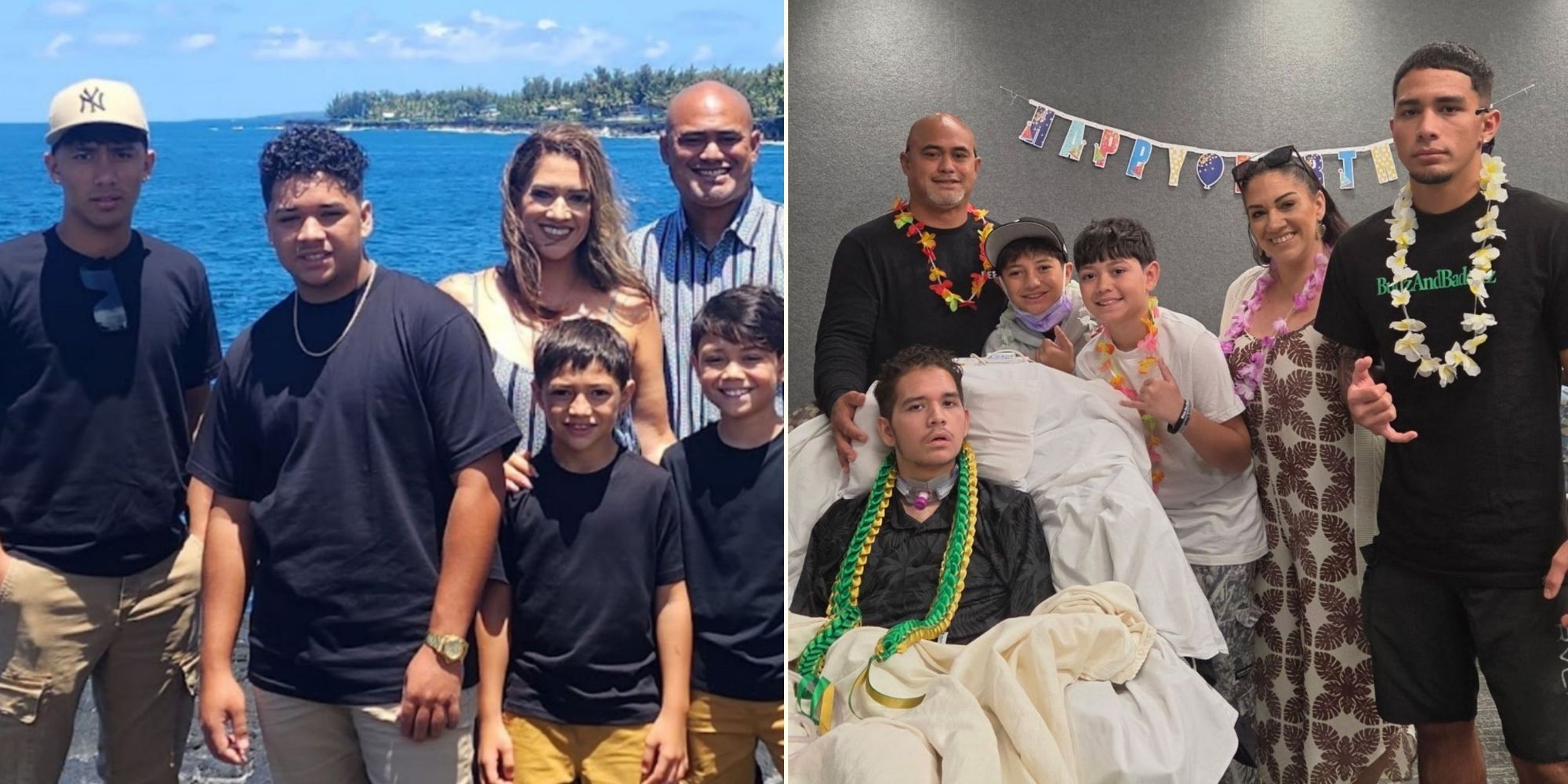
What began as a mysterious headache turned into two massive strokes, three seizures and an emergency flight to Phoenix across the Pacific Ocean.
Last spring, Kahaone “Kaha” Kelau was in Arizona, working full-time at an auto dealership and attending trade school to fulfill his dream of becoming a diesel mechanic.
After graduating in March 2025, Kaha returned home to Hilo, on the Big Island of Hawaii, to begin his career. But within a few short months, a rare illness common to the desert Southwest would change the trajectory of his life and bring him and his mom, Laura, back to Arizona, where they would spend months relying on the support of Ronald McDonald House.
By late July, headaches became frequent and increasingly intense. Doctors initially misdiagnosed them as migraines. After multiple urgent care and emergency department visits, he was finally diagnosed with meningitis in August and airlifted to Honolulu where his condition continued to deteriorate. Then everything changed.
Kaha suffered two strokes and three seizures before doctors finally identified the cause of his meningitis: Valley Fever, a disease so rare in Hawaii that doctors had not considered it and did not know how to treat it.
To get Kaha the care he needed, his family hired a medevac to fly him to Mayo Clinic in Phoenix, where specialists experienced in treating Valley Fever could take over his care.
For Laura, bringing her son back to Arizona meant he could finally receive the treatment that would save his life. But it also meant being nearly 3,000 miles from home, separated from her husband and three other children, ages 19, 12 and 11, and unable to work as she stayed by Kaha’s side.
At first, she paid out of pocket for a place to stay near the hospital. It was an added strain during an already overwhelming time.
When it became apparent that Kaha would be needing long-term care, a hospital social worker connected Laura with Ronald McDonald House.
“I always assumed it was for children under 18, so I never really looked into it,” she said. But she found that their situation met all the criteria: Kaha was under 22, receiving treatment at a local hospital and their home was significantly farther than 30 miles away.
She was able to move into Ronald McDonald House in the nick of time. “I was basically a few meals away from being on the street,” Laura said.
“Just having a clean, safe place to go at the end of the night is the main thing,” she added. “When you’re at the hospital all day, the last thing you want to think about is where to sleep, spending money you don’t have on a meal or trying to cook for yourself.”
That support has made it possible for Laura to focus on what matters most: being there for her son.
“We don’t know what his future looks like,” Laura said. “He’s basically quadriplegic after the massive strokes and he’s having to relearn all of the basic things, like how to breathe on his own and swallow.”
Laura and her son will remain in Phoenix for at least another year while Kaha continues his recovery. Right now, they’re focused on stabilizing his nutrition through his feeding tube so he can transfer from the hospital to a rehab facility.
She says the support she’s received at Ronald McDonald House, from warm meals to kind conversations, has helped carry her through.
“I could never repay Ronald McDonald House for stepping in and saving our family,” Laura said. “Thank you doesn’t seem like enough.”
You can follow Kaha’s story on Instagram at @kahaones_fight